
Category

Uncategorized

Rutger Bergman is right: we are entering a new age of immorality

By Uncategorized

Rutger BergamnRutger Bergman has just delivered this year’s BBC series of Reith Lectures. His contention is that we are entering a new ‘age of immorality’ in which our elites are no longer seriously looking to improve the lot of mankind as a whole. Instead, they are promoting tribal division for their own benefit.

Bergman is right; the Western moral consensus based on liberal humanist attitudes is breaking down. Too many leaders have lost their moral compass. The whole construct that preserved peace and progress since the second world war is creaking. The UN is losing support and credibility. Actions to avert climate change have stalled. More people are being displaced by floods, fires and droughts. Nations are rearming again in anticipation of conflict. With less money to help the disadvantaged, growth in life expectancy in the West has stalled. Aid to Africa has been cut off, further exacerbating distress and conflict. Democracies are losing out to Autocracies.

We seem to be entering a different era in international relations similar to that, that existed before the First World War. Then, there was no concept of international law, conflict between states was a routine occurrence; the powerful strove to conquer others and create empires; and in most countries autocrats ruled and individual liberties were heavily constrained.

To illustrate this unwelcome change in direction, today’s Observer quoted Yeats’ poem. ‘The Second Coming’

Turning and turning in the widening gyre

The falcon cannot hear the falconer;

Things fall apart; the centre cannot hold;

Mere anarchy is loosed upon the world,

The blood-dimmed tide is loosed, and everywhere

The ceremony of innocence is drowned;

The best lack all conviction, while the worst

Are full of passionate intensity.


It is more than time for the best to stand up and be counted.
Another Psycho-drama?

By Uncategorized

What’s wrong with our democracy? It seems the new Labour government is starting to experience the same psycho -dramas as the last Tory administration. Unable to make a substantial difference to people’s lives in the first period of government, they are becoming increasingly riven with internal divisions and leadership crises.

We have had a succession of poor governments. When we needed to focus on the long-term, short-term events have overwhelmed. When we needed leaders with vision and tenacity, we too easily elected leaders with charisma but little understanding. While China was staking strategic steps towards global dominance and America was flexing its muscles – the UK (and the rest of Europe) have drifted rudderless to an uncertain destination.

The British people, however, don’t seem to blame the UK’s democratic system, they merely turn towards another party. Currently Reform are running high in the polls. If current indications of their performance in local government is anything to judge by, a Reform government is likely to be even more chaotic.

According to books by Ian Dunt and Sam Freeman the British Democratic system is characterised by short-term thinking, lack of expertise and a failure to delegate. It was designed for another: slower moving and simpler age. We desperately need to reform our democratic processes to make them fit for the modern era.

Until this happens, psycho dramas are likely to continue.

Democracies are failing

By Uncategorized

populismTrump won and international co-operation lost. We are into a new dark age. US democracy has been in trouble for decades and has finally reached its nadir. Big money has won through. We are reverting to an age of authoritarianism, jingoism and inequality. The lessons of the Second World War seem to have been forgotten.

It isn’t just in America. Right across the world democracies have been found wanting. Backed by business interests, new ‘strong men’ have hijacked the system: Orban, Modi, Erdogan, Netanyahu and of course Putin.

As George Monbiot wrote in the Guardian:https://www.theguardian.com/commentisfree/2024/nov/07/trump-voters-revolution-politics-right

On almost all fronts, decency and humanity have been retreating for years. Genocide, colonial conquest, the seizure of resources from the poor: all are resurgent, even before Trump returns to the White House. The rich have learned how to game our political systems. Capital has found the means of solving its longstanding problem: democracy.

The British model of democracy no longer looks fit for purpose. It is incapable of anything other than reacting to events. As I showed in my last post, it is characterised by a lack of expertise, short-term thinking and a failure to delegate. Right across Europe democracies face similar problems; they are struggling to cope with the pressures of immigration and relative economic decline. Europe once at the centre of the world is failing to compete economically with China and the USA.

Europe and Japan are the last bastions of the international consensus that is necessary to tackle climate change, falling biodiversity, environmental pollution and overexploitation of the oceans. If nations fail to co-operate the Earth will be the biggest looser and the grim reapers of war, famine, natural disaster, plague, economic failure, revolution and environmental disaster will sweep the planet.

The old democratic systems no longer work. We desperately need a newmodel of democracy that can deliver for all, not just the rich. But time is short. Memetic evolution is gathering apace. It needs to happen soon.


British Democracy isn’t Working

By Uncategorized

failed statewhy Westminster worksI have been reading ‘How Westminster Works … and why it doesn’t ‘by Ian Dunt and ‘Failed State’ by Sam Freeman. They make a clear case that the democratic process in Britain is failing to deliver the standard of governance we need. There are two major problems. Firstly, the systems of Government are characterised by short-term thinking, lack of expertise and a failure to delegate. Secondly, the excessively tribal nature of political parties means that there is little scrutiny and control of Government by Parliament.

It starts with the selection of candidate MPs by a small cabal of party members. In this process the ability to repeat party dogma is more important than experience, knowledge and proven management ability.

When they get to the Commons MPs are expected to support the Government at all times and not hinder the legislative process. Promotion to Minister depends on government patronage, stepping out of line is career threatening.  As a result, the scrutiny of bills passing through parliament is extremely poor.

If they become a Minister, they are unlikely to have any formal expertise or training before they take up their posts. They are immediately overwhelmed with a daily workload of ‘red box’ decisions -typically 30-40 a day. Part of the problem is that the role of local government has been continually reduced over the past few decades. Successive governments have overcentralised decision making and the centre does not have the resources or expertise to manage local problems.

This lack of expertise is not alleviated by the civil service; they are generalists. If by accident they acquire some expertise and become good at their job, this is not appropriately rewarded.  To get promotion they have to move onto another department. Senior civil servants are in post a similar short length of time to Ministers.

Because of the lack of expertise in the Ministries there is an overuse of consultancy and outsourcing. Much control has been handed over to profit seeking conglomerates: – social care, childcare and children’s homes have been left at the mercy of unguided markets.


The Prime Minister has unlimited power but not the resources to exercise it. The size of his office is limited by the size of 10 Downing Street. He is essentially trying to run the country from a private house. Successive Prime Ministers are so wedded to history and tradition that they refuse to set up a more appropriate office elsewhere.

Britain has been stagnating for years because the political system isn’t working. Ministers lack   management talent. There is little expertise in Government and the focus is on short term achievement.

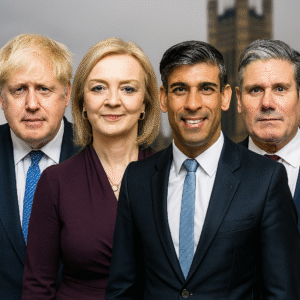
Because the effect of any change in the political system will be effective over a longer period and therefore will not improve re-election chances, no political party is interested in radical change. If you want proof that British democracy isn’t working you only have to consider the fact that we have had 5 Prime Ministers in 2 years since 2022: Johnson, May, Truss, Sunak and Starmer.

Change will not come from the current set of political parties.  It will only come from a sustained challenge from the general public who are suffering the decline of Britain from a once ‘Great Power’ to an also-ran.


Why do Americans vote for Trump?

By Uncategorized

Most Europeans can’t understand why Americans vote for Trump. He is a liar, misogynist and a narcissist. He lacks the charisma of a populist like Boris Johnson; his speeches are long, rambling, humourless and frankly boring. What then is his appeal? He wouldn’t stand a chance of being elected in Europe. Why then Is he so popular in America?

trump is an idiotGeorge Monbiot , writing in the Guardian thinks he has part of the answer https://www.theguardian.com/commentisfree/2024/jan/29/donald-trump-americans-us-culture-republican. He identifies Trump as the ‘king’ of those who display an ‘extrinsic’ personality, that is those that:

are strongly motivated by the prospect of individual reward and praise. They are more likely to objectify and exploit other people, to behave rudely and aggressively and to dismiss social and environmental impacts. They have little interest in cooperation or community. People with a strong set of extrinsic values are more likely to suffer from frustration, dissatisfaction, stress, anxiety, anger and compulsive behaviour.

But why would anyone want to follow someone like that? As with all populists his views chime with all those that feel threatened by those that are ‘not one of us’: often characterised as immigrants, homosexuals, those with a black skin and so on. But why is he a successful populist?

Monbiot believes the answer is tied up with the American dream – the belief that success is possible for anyone who works hard enough. It is this vision that drove the growth of the American economy for the past two centuries. However, the dream is souring. Inequality has increased massively in the last few decades. More and more wealth is becoming concentrated in the hands of the top 1% of the population.  American society is now less mobile than most of Europe’s. Inherited wealth has frozen movement between classes; a new rich ‘aristocracy’ has been created. Those with wealthy parents go to better schools, better universities and have better access to the top jobs, leaving those from poor backgrounds with much less opportunity to be successful.

When people fail to reach their expected level of wealth, they naturally look for someone or something to blame. Trump blames the ‘deep state’ – a mythical conspiracy of left leaning people in education, government, the law, and the press. This resonates with people who are struggling and angry that the American Dream has passed them by.  In former times the workers would have rounded on the factory bosses, but now in this dog-eat-dog society it is those who govern or administer who are seen as the enemies of the people. The failure of the American Dream is the reason for Trump’s success.

Extrinsic behaviour is opposed to the principles of Eco-humanity.  It will inevitably lead to more discord and conflict in society. Its popularity, as demonstrated by Trump, is threatening to us all.

Common Humanity

By Uncategorized

Common HumanityThe depressing news from Israel and Gaza is a reminder to us all of the destructive force of antagonistic tribes.  As Dostoevsky said: ‘“People speak sometimes about the “bestial” cruelty of man, but that is terribly unjust and offensive to beasts, no animal could ever be so cruel as a man, so artfully, so artistically cruel.”

The conflict in Palestine is doubly shocking because, in the West, group behaviour has become progressively more tolerant and humane since the end of the Second World War. In particular, women have gained a more important role in society and we have become less judgemental of minorities. No longer are divorcees, unmarried mothers, bastards and homosexuals stigmatised. We have set laws for discrimination on the grounds of gender, disability, race or religion.

This change in opinion is confirmed by the most recent results from the British Attitude Survey https://www.theguardian.com/society/2023/sep/21/britain-is-much-more-liberal-minded-than-is-was-40-years-ago-study-finds . One researcher described the change as a ‘near revolution’.

The only way to overcome tribal behaviours is by an appeal to common humanity. What is common humanity? This definition of values on the Humanist UK website sums it up for me.

In all our work, we strive to embody our values by:

  • engaging in dialogue and debate rationally, intelligently, and with evidence;
  • recognising the dignity of individuals and treating them with fairness and respect;
  • respecting and promoting freedom, democracy, human rights, and the rule of law;
  • taking opportunities to combat all forms of prejudice and unfair discrimination;
  • cooperating with others for the common good, including those of different beliefs;
  • celebrating human achievement, progress, and potential;
  • accepting that human beings are part of a wider natural world which must be treated sustainably for the sake of current and future generations.

There is no reason why both the religious and non-religious should not support these principles. It is impossible to see these concepts being adopted in Palestine right now. However, in Northern Ireland, which has similar intrinsically engrained problems, some progress has been made on these lines since the Good Friday Agreement.

If the world is to co-operate to overcome our common problems of climate change, habitat loss, and pollution we will need to exercise as much common humanity as possible. Tribal behaviours will condemn us all to a deteriorating world.

Economics is a failed discipline 2

By Uncategorized

economic failureThe most important bi-product of the study of economics has been the creation and collection of measures of commercial and financial activity. We now know to a reasonable degree of accuracy a country’s total sales, investment, income, exports and imports. We know how this income is distributed – what share goes to company bosses and what is the average income of the poor. We have (less reliable) estimates of total monetary wealth and what proportion is owned by the top 10%. We know how many people are unemployed and of those how many are simply unable to work.

How we use these measures to direct national policy is important. As with all measures, it is vital to understand both their definitions and limitations. A country’s economic statistics can never be said to be totally accurate; they are always based on sampling and arbitrary definitions of what is included. Predicting GDP to an accuracy of 0.1%, as many economists do, makes no sense.

A further issue is that the critical measure selected by economists for politicians to concentrate on is GDP, the total value of goods produced and services provided in a country during one year. Countries are encouraged to achieve high levels of GDP growth. For the national good, however, it is crucial what type of growth is being achieved and who is benefiting. This is being largely ignored in setting policy.

An example of misleading GDP growth occurred before the financial crisis in 2008. The definition of GDP includes interest charges by banks. Just before the credit crunch banks were making huge profits by making irresponsible loans and GDP grew rapidly as a result. Subsequent asset losses when the loans failed were not fully taken into account due to government intervention.

Another example of the misleading nature of GDP measurement is that it includes estimates of the income from crime and gambling.  Few would agree that an increase in either would be of benefit to a country.

Further, and this is the case at the moment, if the gains are largely made by the super-rich whilst other incomes stagnate then social discontent is bound to follow.

The biggest problem, however, in concentrating on GDP as the sole measure of success, is that it records changes in income and expenditure, not wealth. Money spent on defence and policing, protects but doesn’t improve the wealth of the nation. Money spent on fashion, entertainment and leisure, whilst being enjoyable, doesn’t increase a nation’s wealth unless it attracts custom from overseas. Money spent on gambling only enriches (largely overseas based) bookmaker firms.

Surely a country should be aiming to increase its wealth. The wealth of a country is determined by the total level of resources it acquires. There are 4 types of resource: physical, natural, knowledge and human. Improvements in physical resources, buildings, plant and infrastructure, are achieved by   business investment and government expenditure. Natural wealth is our inheritance; it is easy to destroy. With care, however, it can be both preserved and exploited. Knowledge and skills are maintained and developed in our universities and businesses and are improved by expenditure on research, development and training. Human abilities are advanced by education, healthy living, and healthcare and welfare support.

Focussing on GDP as the sole measure of wealth creation can, and will, be counterproductive. By encouraging politicians to ignore wealth creation and distribution, economists may well have set back rather than helped the development of advanced nations.

Economics is a failed discipline

By Uncategorized

economic failure‘Why did nobody notice it?’ is the question Queen Elizabeth II famously asked Economics Professors about the credit crisis which led to the 2008 Recession. It was obvious to many people that the practice of extending sub-prime loans to poor households in the USA was getting out of control. The fact that banks were leveraging these loans to acquire more debt should have alerted regulators to the danger of a run on the banks. Yet nothing was done until it was almost too late. This failure to notice that credit was over-extended, raise any alarm, let alone to act, is the ultimate condemnation of economics as an academic discipline.

It went wrong in the nineteenth century when it was shown mathematically that if firstly, there is full and fair competition, secondly buyers have access to the full information on available purchase options, and thirdly buyers always choose the cheapest purchase that satisfies their requirements, then it is possible to reach a state of equilibrium in which costs and prices are minimised. From then on, they assumed that purchase decisions were made in this way and that the proof explained the undoubted success of the market mechanism. This encouraged economists to believe that economics is a mathematical discipline. That, as in science, there are laws that relate all the economic variables. In essence that the economy is a giant clockwork machine in which once the inputs are known the results can be predicted.

The reality is that humans don’t make rational decisions based solely on price; for instance brands play a big role. This is because people never truly know the quality of goods they are buying, hence a supplier’s reputation is a critical factor in purchase decisions.

Also, there is never full and fair competition. Companies strive to establish unique selling points for which they can extract a price premium. This is crucial. If the lowest price seller always won out, there would be little profit remaining for future investment. Full competition is also impossible because it takes time and money to establish a company’s reputation.  Hence it is difficult for firms to freely enter or exit a market and as a result a small number of firms often dominate a market sector.

Stability is one thing markets never achieve. There is always dynamism. Raw materials can be in short supply. Transport links break down.  New products are brought to market.  Companies fail and competitors merge. The economy is the result of a complicated interaction between people, companies and states. There is no automatic link between demand and supply, prices and volumes, investment and interest rates, unemployment and wages. All links are nuanced, complicated and dynamically integrated with external factors. The idea that scientific laws exist linking these variables is pure fantasy. Yet these ‘laws’ continue to be taught in degree courses. Economists still act as if they are true. The discipline needs to be reset as what it really is a ‘social’ not a ‘real’ science.


For more background read https://www.theguardian.com/commentisfree/2019/aug/03/economics-global-economy-climate-crisis


Chaotic Government

By Uncategorized

ShappsWant to know what sort of chaotic government we have? The career of Grant Shapps gives you a guide.  Shapps was appointed Transport Secretary on July 24, 2019, as Boris Johnson formed his first cabinet after replacing Theresa May as prime minister. Compared with what was to follow, his time in the role was relatively long-lasting, taking him all the way to  Johnson’s resignation on September 6, 2022.

After backing Rishi Sunak’s leadership campaign last summer, Shapps was initially overlooked for a cabinet job by new prime minister Liz Truss.

However, as her short-lived time in office reached its denouement, Shapps was called upon last October to become Home Secretary following the resignation of Suella Braverman for breaking security rules. Incredibly, he only held the job for six days after Truss resigned following her disastrous 45 days at No.10.

Shapps bid farewell to the Home Office to take over at Business, Energy and Industrial Strategy  in Sunak’s first cabinet. But less than four months later, in February this year, he had to change his business cards yet again as the prime minister carried out a government shake-up.

With climate change moving up the political agenda, Sunak put his close ally in charge of the newly-created department for Energy Security and Net Zero.

With Ben Wallace announcing that he planned to stand down from the government at the next reshuffle, Sunak again turned to his faithful friend to take over at the Ministry of Defence. Needless to say Shapps has no defence experience.

That’s 5 positions held in a year.  5 roles to understand, manage and to set a strategy for. It’s impossible to achieve anything in such a short time. Such a rapid rotation of disparate roles would never happen in any sane business. But. it’s the chaotic way our democracy works at the moment.


The Power of Money

By Uncategorized

99%Ever feel that, although you have a vote, nothing you want to happen ever gets done?  Elective democracies give most of us a tiny bit of power but absolutely no influence. But what if you were rich? All you would have to do is to offer to make a significant party donation and you would immediately have the ear of those in government.

Mark E. Thomas in his book 99% claims that we may live in a one man one vote democracy but it is also a one pound one unit of influence government.  Putting aside direct corruption, there are so many ways the rich can, and do, influence government outcomes:

  • Funding think tanks that espouse their interests
  • Conditional party donations (before the Ukrainian war much Tory wealth came from Russians)
  • Direct Lobbying through professional lobbyists
  • Funding parliamentary pressure groups
  • Astro-turfing (pretending their concerns are the outcome of a publicly funded campaign group)
  • Media management and ownership (Murdoch is an obvious example)
  • Calling directly on friends in government (So many Tories have been at private school or Oxbridge together)
  • Threats to withdraw funding for business schemes
  • Inducements by promising to support favourable business schemes
  • Directly employing parliamentarians or offering them jobs in later life.

It is obvious to all that government policy in the UK is directly influenced by the rich to their own benefit. The situation is worse in the USA. A 2015 study by Princeton University showed that if a policy was popular with the general public, it did not increase its chances of becoming law, only when the rich became involved did laws reach the statute books.

Thomas claims that, in the West, the priority of current government economic policies is firstly to make sure the poorest don’t slip below the poverty line, but secondly to preserve the growth in incomes of the top 1%. The result is that those in middle incomes are steadily becoming worse off and mean incomes are declining. If the current trends continue he claims that by 2050 there will be mass impoverishment. This trend is certainly well-established in the USA. To quote Thomas:

The data show that although the richest are better off and the bottom 20% have been protected, most of the US population are around 20% worse off in real terms today than they were in the year 2000. And this is despite the fact that real GDP has grown by 17% in the same period.

Thomas’s solution? Reduce the power of money to directly influence government by:

  1. Banning all political party donations by businesses
  2. Limiting the donations by individuals to that affordable by the ordinary citizen
  3. Establishing strict controls over lobbying and full transparency over the source of funds of lobbying groups


He has other proposals for: reducing the influence of media owners, ensuring academic studies are not biased by business donations, and establishing a constitutional requirement to govern for the good of all.

Could this be done? It is possible, but it depends on whether a political party could ever become successful without relying on the rich for financial and media support. So far none has tried.